Rijeka Gateway Marks First Year of Commercial Operations
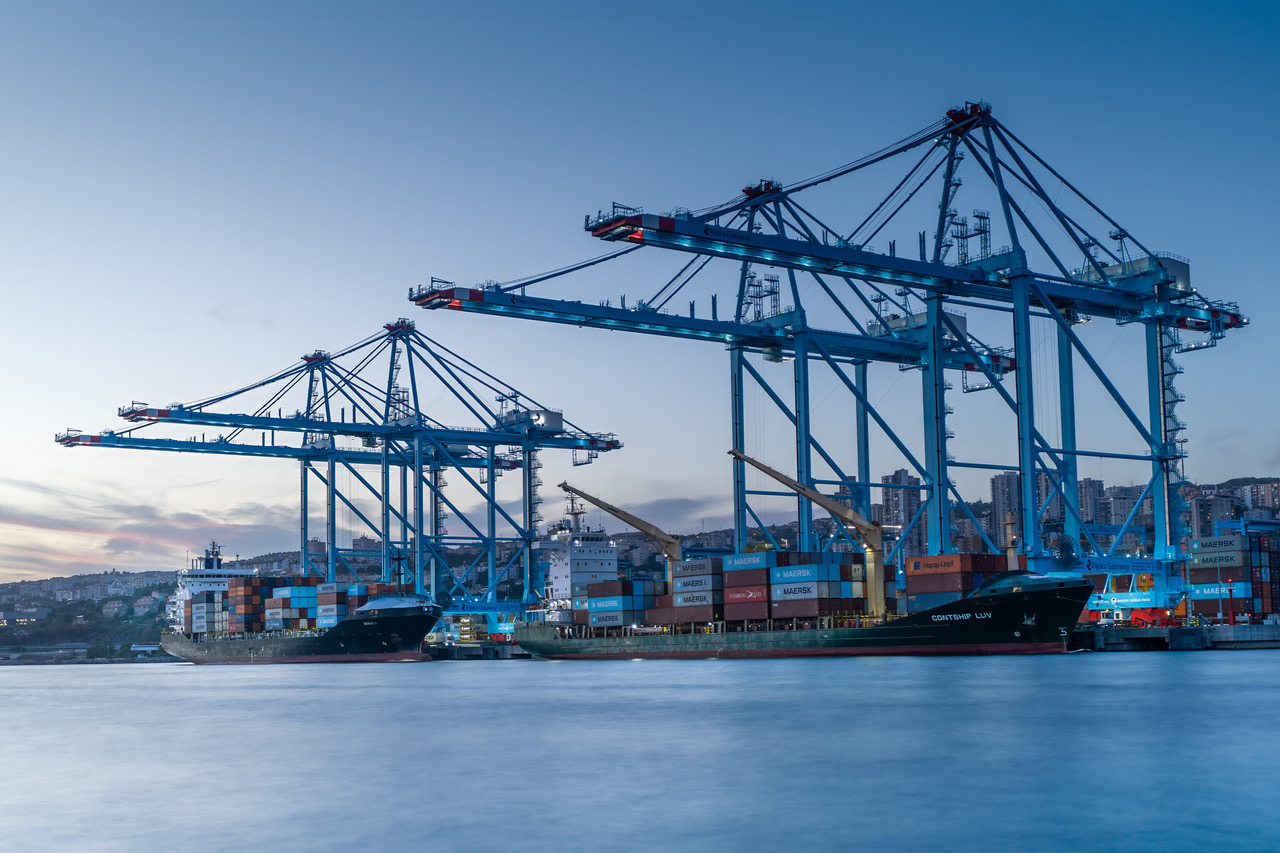
Rijeka Gateway, a company jointly owned by APM Terminals and ENNA, has marked the first anniversary of its commercial operations. During its first year, the terminal handled 370,000 TEUs of cargo, equivalent to approximately 225,000 containers, while a total of 100 vessels called at the terminal – 47 large mainline vessels operating on the Asia–Europe route and 53 feeder vessels.
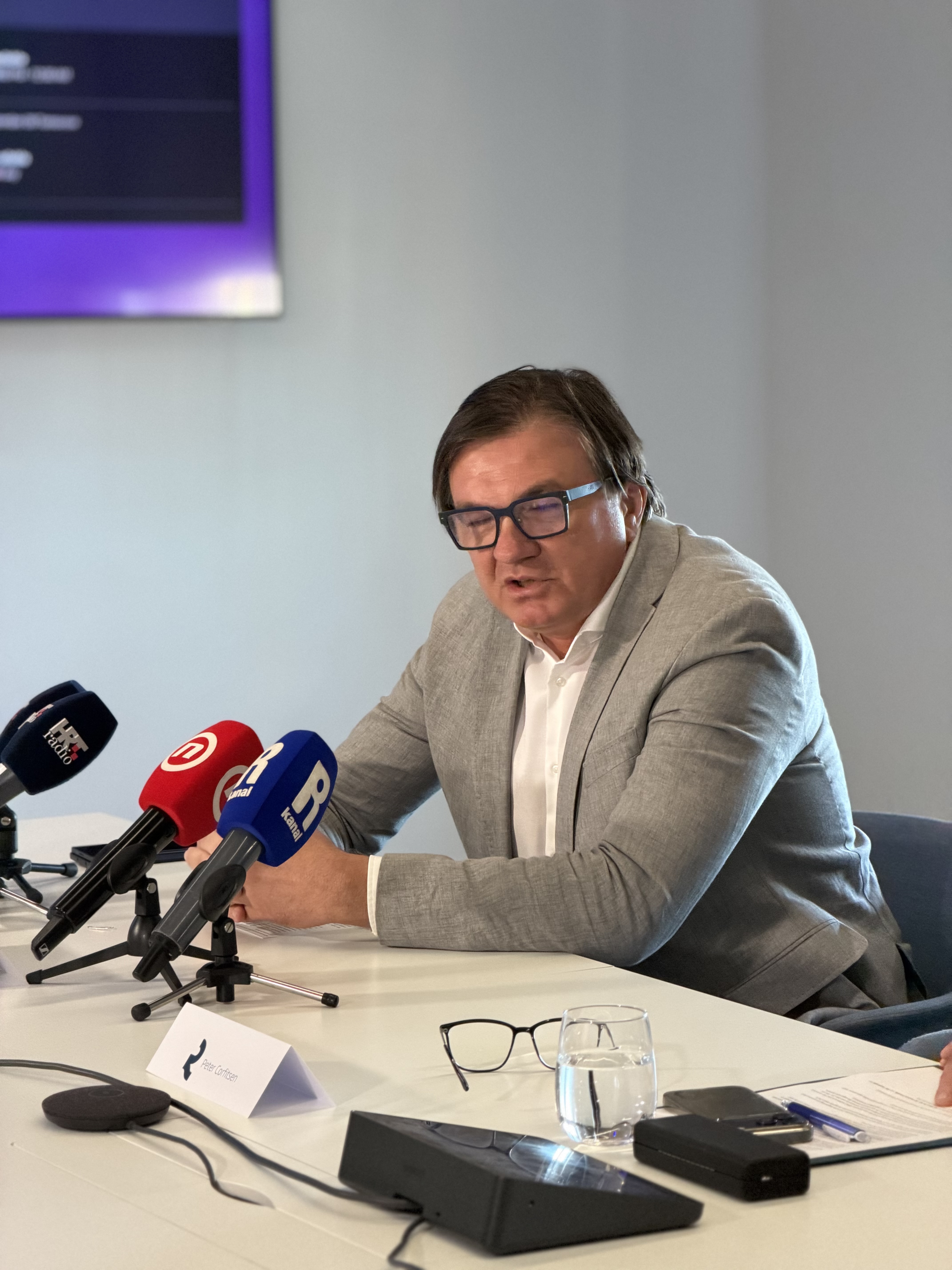
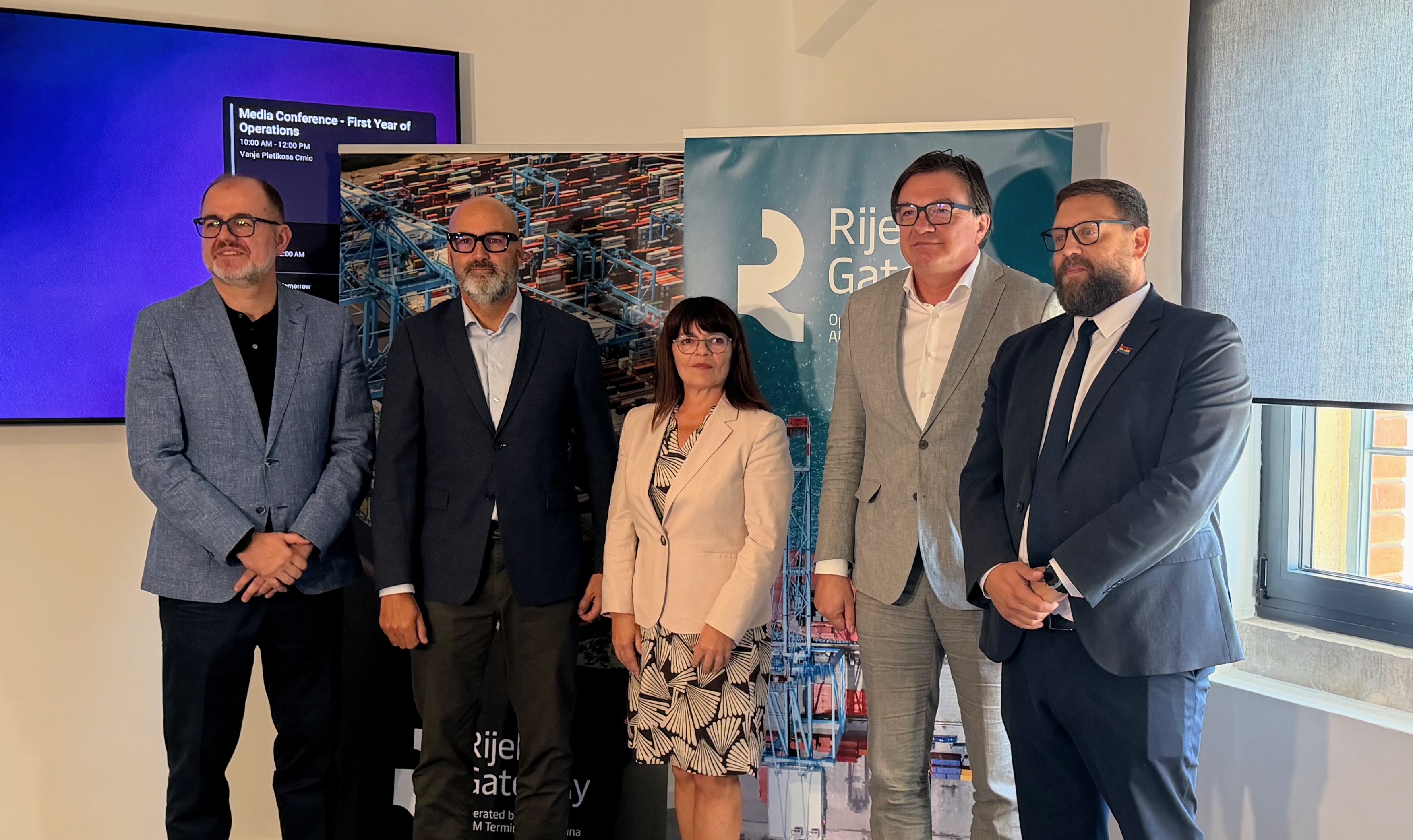
To mark the first anniversary, a press conference was held with Peter Corfitsen, CEO of Rijeka Gateway Ltd, and Tomislav Rosandić, Member of the Management Board. The event was also attended by Vedran Vivoda, Deputy Mayor of the City of Rijeka; Denis Vukorepa, Executive Director of the Port of Rijeka Authority; and Nina Perko, Ph.D., Director of Directorate for Maritime Affairs at the Ministry of the Sea, Transport and Infrastructure.
Nina Perko, Director of the Directorate for Maritime Affairs at the Ministry of the Sea, Transport and Infrastructure, highlighted Rijeka’s long-standing development and European role, stressing the importance of continued investment in the port’s transport connectivity. In particular, she emphasized the need to accelerate the connection of the container terminals to a double-track railway in order to enable more efficient evacuation of cargo from the port. She described Rijeka Gateway as an important contribution to further positioning Rijeka as a European logistics hub.
Denis Vukorepa, Executive Director of the Port of Rijeka Authority, said that the results of the first year of operations had confirmed expectations regarding the importance of Rijeka Gateway for Rijeka, Croatia and this transport corridor. He particularly highlighted the fact that the terminal welcomed its 100th vessel in less than a year and created 422 new jobs, further strengthening Rijeka’s position on the map of European and global logistics flows. He described Rijeka Gateway as an important foundation for the further development of the port and a significant step forward for the economy of Rijeka and Croatia.
Peter Corfitsen, CEO of Rijeka Gateway, identified the development of a young and highly skilled team, the establishment of new logistics corridors connecting Rijeka with the wider region, and a responsible approach to the environment and local community among the key achievements of the first year. Since the start of operations, the terminal has handled more than 1,000 trains and 80,000 trucks, with 42% of cargo transported by rail. A fully digitalized truck flow has also been introduced, enabling faster cargo processing.
Tomislav Rosandić, Member of the Management Board of Rijeka Gateway, said that handling more than 370,000 TEUs had significantly increased the overall capacity of the Port of Rijeka and confirmed the path towards 650,000 TEUs, and, in the second phase, towards one million TEUs. He highlighted the terminal’s high level of operational reliability and emphasized the importance of further increasing rail capacity. He also highlighted the continuation of cooperation with the University of Rijeka and investments in the local community through scholarship, education and donation programmes.
During its first year of operations, Rijeka Gateway established cooperation with the world’s largest shipping companies, Maersk and Hapag-Lloyd, which use the terminal as a transshipment hub for import and export cargo to and from Italy. This has further strengthened its role as a regional logistics hub for container traffic in the Adriatic and makes Rijeka Gateway the only Adriatic terminal performing this type of operation within the Gemini Cooperation network. Rijeka Gateway is a key port of call within the Gemini Cooperation’s AE12/SE1 service, connecting major Asian ports with the Mediterranean. This has further strengthened Rijeka’s connections with Trieste, Venice, Ravenna and Ancona.
The terminal is currently served weekly by three vessels – one large mainline vessel operating on the Asia–Europe service and two feeder vessels – while an additional feeder service to Ploče and Durrës is expected to be introduced soon. Parallel operations have also been introduced, enabling simultaneous berthing and handling of two feeder vessels of approximately 150 metres in length. This allows for more efficient use of the operational terminal, reduces vessel waiting times and increases the efficiency of terminal operations.